
Soy and Your Balls: Does It Actually Lower Testosterone?
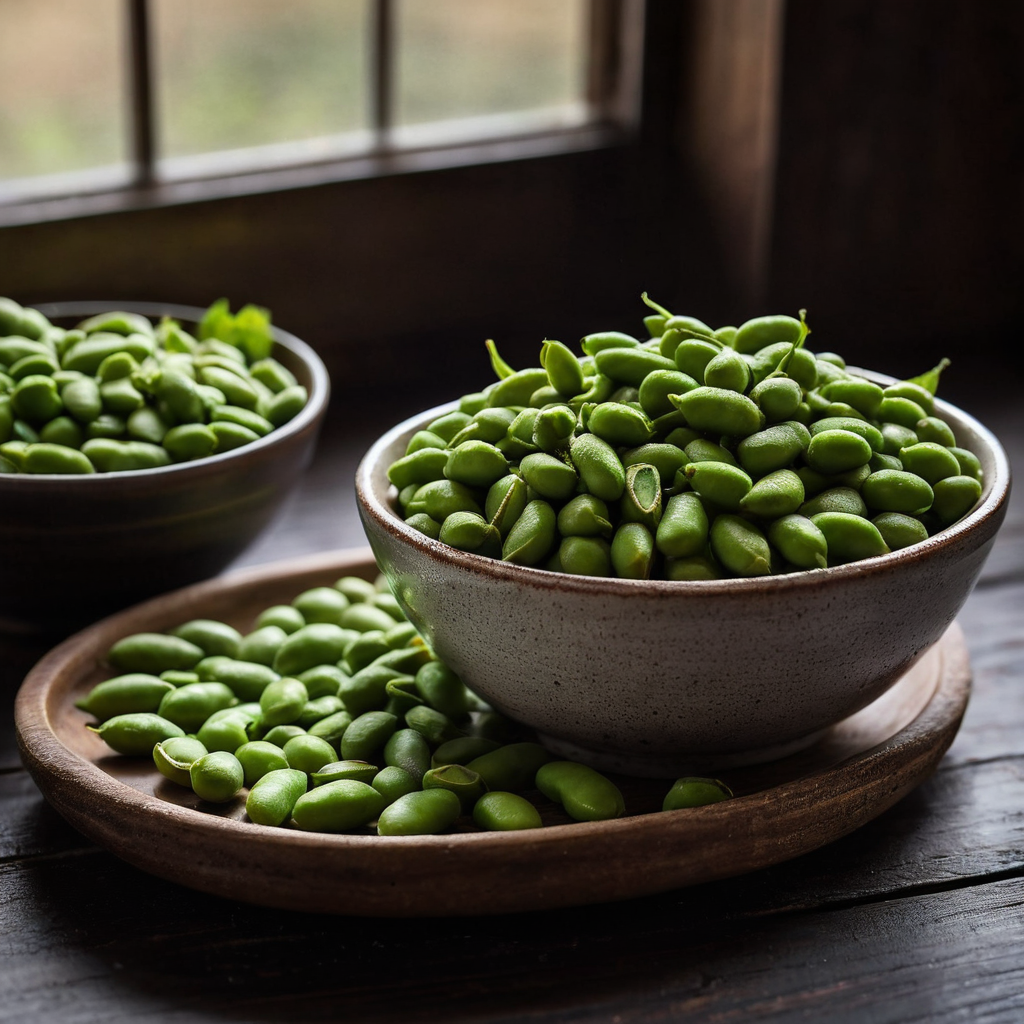
Soy has picked up a reputation it doesn't deserve. Somewhere along the way "contains phytoestrogens" became "acts like estrogen in your body", which became "lowers your testosterone", which became "soy boy" — a joke that has done more damage to men's nutrition than any actual study.
So let's do this properly. What does soy actually do to testosterone, sperm and testicular function, what does the research show, and is there anyone who genuinely needs to watch their intake?
What phytoestrogens actually are
Isoflavones — genistein and daidzein, the compounds in soy — are plant compounds that bind weakly to estrogen receptors. That's the whole basis of the concern. They're structurally similar enough to estradiol to interact with the receptor, but their binding affinity is roughly 1/1000th to 1/10,000th that of your own estrogen. They're not estrogen. They're a very quiet whisper in the same room.
And here's the part that gets skipped: your body already has far more estrogen than any soy serving could provide. A man produces estrogen every day, converted from testosterone by aromatase. A typical soy serving delivers isoflavone levels that barely register against that baseline.
There's also a mechanism that works in the opposite direction. Isoflavones can bind to ERβ, one of the two estrogen receptor subtypes, and ERβ activity in the testes is generally associated with protective rather than feminising effects. So soy isn't simply adding estrogen pressure — it's nudging a receptor system that has its own balancing logic.
What the trials on testosterone actually show
This has been studied properly, in men, with controlled intakes. The pattern is remarkably consistent.
A meta-analysis pooling randomised controlled trials of soy protein and isoflavone supplementation in men found no significant effect on total testosterone, free testosterone, or sex hormone binding globulin. Similar reviews looking specifically at isoflavone supplements reached the same conclusion. When trials do find a difference, it's usually small, within normal biological variation, and often disappears when you account for baseline levels.
The one caveat worth knowing: a few older studies suggested a modest testosterone reduction in men consuming very high soy intakes — the kind of amount you'd only reach by deliberately supplementing, not by eating tofu twice a week. And even those effects were small.
So the honest summary: normal dietary soy intake does not meaningfully change testosterone in men. If you're eating soy as part of a normal diet, this is a non-issue.
Sperm and fertility
This is where the research is more interesting, because there's a real signal here — just not the one people expect.
Several studies have looked at soy intake and sperm concentration, particularly in men attending fertility clinics. Some found associations between high soy intake and lower sperm concentration; others found nothing. A systematic review of the evidence concluded that the data are inconsistent, and that effects — where they exist — appear in men with already compromised fertility or at high intakes, not in healthy men eating moderate amounts.
The practical read: if you're trying to conceive and you're already dealing with a fertility issue, it's reasonable to not go overboard on soy. If you're healthy and eating normal amounts, there's no strong reason to avoid it. And if you're worried, the sensible move is to get a semen analysis rather than guessing from your diet — our sperm health guide covers what the numbers mean and what actually moves them.
Does soy shrink your balls?
No. There's no credible mechanism for testicular shrinkage from dietary soy, and no trial showing it. Testicular volume is driven mainly by what's happening in the HPG axis — your brain's signalling to the testes — and soy doesn't meaningfully disrupt that at normal intakes.
The things that do shrink your balls are well established: exogenous testosterone and steroids (shutting down your own production), significant heat exposure, and some medical conditions. Our guides on steroids and heat cover those properly. Soy isn't in that league.
Who should actually pay attention
Three groups, and they're narrow:
Men with diagnosed hypothyroidism who don't take their medication properly. Soy isoflavones can interfere with thyroid hormone absorption, particularly if you're relying on levothyroxine and taking it alongside soy. The fix is trivial: separate your medication from soy foods by a few hours. This is a real, well-documented interaction — but it's about thyroid medication timing, not testosterone.
Men with existing fertility problems. As above — worth moderating high intakes while you're actively trying, and worth getting real numbers rather than guessing.
Anyone eating an extreme amount. If you're living on soy protein isolate shakes, tofu, tempeh and edamame across every meal, you're at intakes far above the studied "normal diet" range. Even then the effects are modest, but it's the only scenario where the question is genuinely live.
Everyone else — the guy who has a soy latte and some edamame — is fine.
The dose reality check
Let's put actual numbers on it, because "soy" in these debates usually means something vague and enormous.
A standard serving of tofu is around 25–30 mg of isoflavones. A cup of soy milk is roughly 6–10 mg. Edamame is in a similar range. The trials that showed effects were often using 40–100+ mg of isolated isoflavones per day, as a supplement, for months.
So a normal diet containing soy lands well below the levels where anything interesting happens. The fear is calibrated to supplement doses, not to food.
What soy actually does for you
Worth saying, because the debate is so one-sided: soy is a complete protein — one of the few plant sources with all essential amino acids in useful amounts. It's high in fibre, low in saturated fat, and consistently associated with better cardiovascular markers in large cohort studies. For men specifically, soy protein is a perfectly good way to hit protein targets without leaning entirely on meat and whey.
If you're training and trying to eat more plant protein, soy is one of your better options. Our workout guide makes the point that what matters for your balls during training is heat and support, not your protein source.
The bottom line
Soy doesn't lower your testosterone at normal intakes, doesn't shrink your balls, and has only a modest and inconsistent relationship with sperm quality in men who already have fertility issues. The phytoestrogen scare is based on a mechanism that's real but far too weak to matter at dietary doses.
Eat the tofu. Separate your thyroid medication from your soy latte. Get a semen analysis if you're actually trying to conceive and worried. And stop letting a meme decide your protein sources.
If you want the wider picture on what genuinely affects your testosterone, the low testosterone guide and the sleep and testosterone guide are where the real levers are — sleep, body composition, alcohol, and stress, in roughly that order.
💪 Ballsy product picks
Men's health & grooming staples our readers trust. Affiliate links support the site at no extra cost to you.